
Precast Concrete Engineering
Reigstad delivers precast concrete engineering for complex commercial and structural projects across the country.
Request an estimate
Tell us what you need
Precast Concrete Engineering Built on 47 Years
Reigstad provides precast concrete engineering for commercial, institutional, and infrastructure projects throughout the United States. Established in 1979 and licensed in Minnesota and Mississippi, we've completed precast design and detailing on thousands of projects spanning parking structures, stadiums, office buildings, warehouses, and specialty facilities. If your project demands engineering depth and not just a stamped drawing, call us at (651) 292-1123.
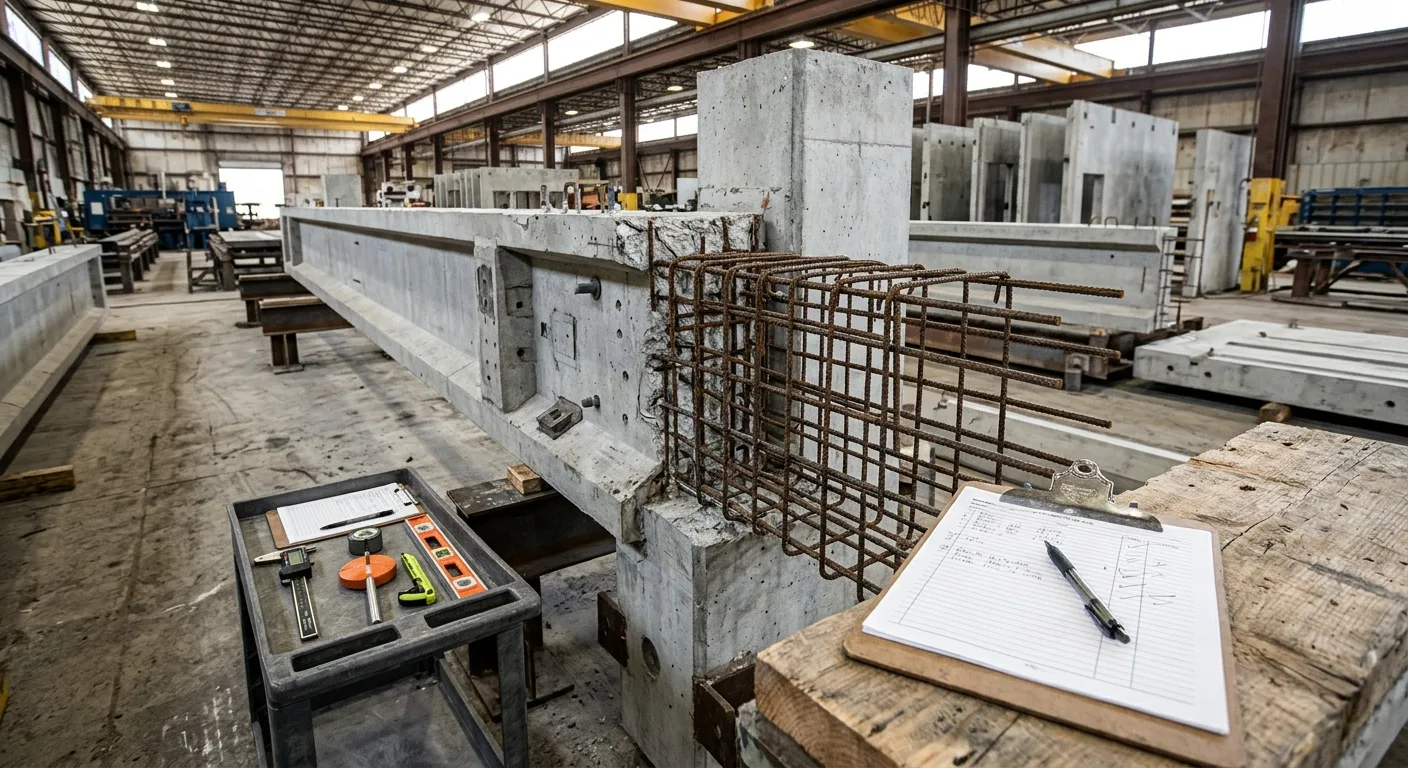
Precast concrete engineering is a distinct discipline from general concrete construction. The work involves structural system selection, member design, connection detailing, and coordination with fabricators and erectors well before a single piece leaves the plant. What drives scope and complexity on a precast project: member spans and load requirements, connection geometry, tolerances for erection, the number of unique piece types, and whether the structure demands architectural finishes or only structural performance. Projects with repetitive bays and standardized sections move faster and cost less to engineer than those with irregular geometry or custom architectural profiles. Every job is different. Contact Reigstad for an accurate estimate.
What Precast Concrete Engineering Involves
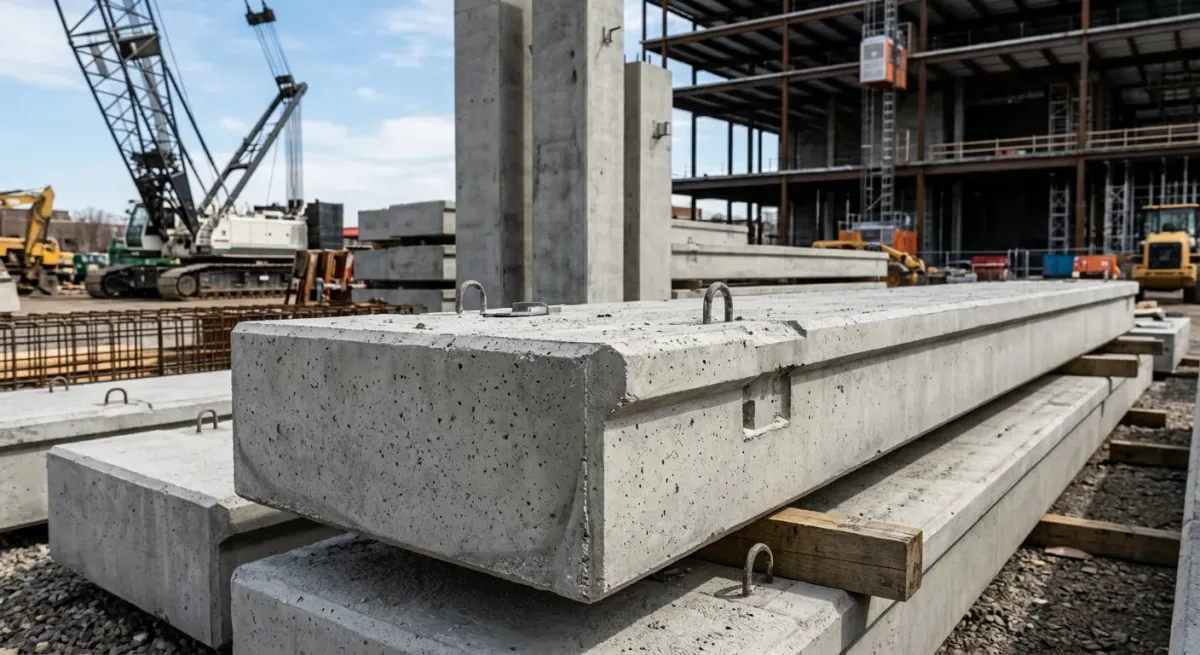
- Structural system selection: determining where precast outperforms cast-in-place or steel
- Member design for double tees, hollow-core planks, beams, columns, and wall panels
- Connection design and detailing for gravity, lateral, and seismic load paths
- Coordination with precast fabricators on plant capabilities and production schedules
- Review of erection drawings and field support during construction
Engineering Process
Precast vs. Cast-in-Place: Choosing the Right System
The choice between precast and cast-in-place concrete affects schedule, cost, and long-term structural performance.
Controlled Fabrication
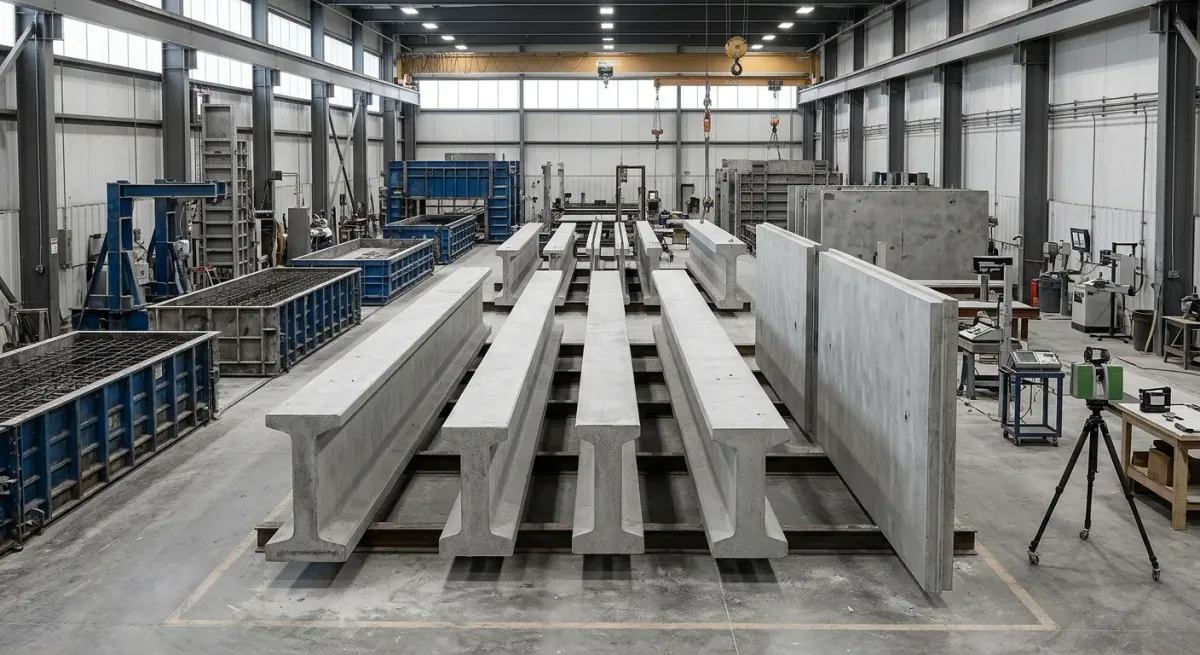
Precast members are cast in a plant under controlled conditions, which produces more consistent concrete quality and allows reinforcement to be precisely positioned. That matters most on long-span members where deflection tolerances are tight.
Compressed Construction Schedules
Fabrication runs parallel to site work. By the time foundations are ready, structural members are already staged for erection. On projects with demanding schedules, that parallel-path advantage is often the deciding factor.
When Cast-in-Place Makes More Sense
Irregular geometry, heavily congested connections, or projects where a precast plant isn't within practical shipping distance are cases where cast-in-place or structural steel may be the better engineering answer. We'll tell you which.
Freeze-Thaw Performance
In climates with severe freeze-thaw cycling, precast concrete produced at low water-cement ratios and properly air-entrained outperforms site-cast concrete placed under variable weather conditions. This is a real durability advantage in northern climate construction.
Precast Products
Structural, Architectural, and Utility Precast Systems
Precast concrete spans a wide range of product types. Each has specific engineering requirements.
Structural Framing
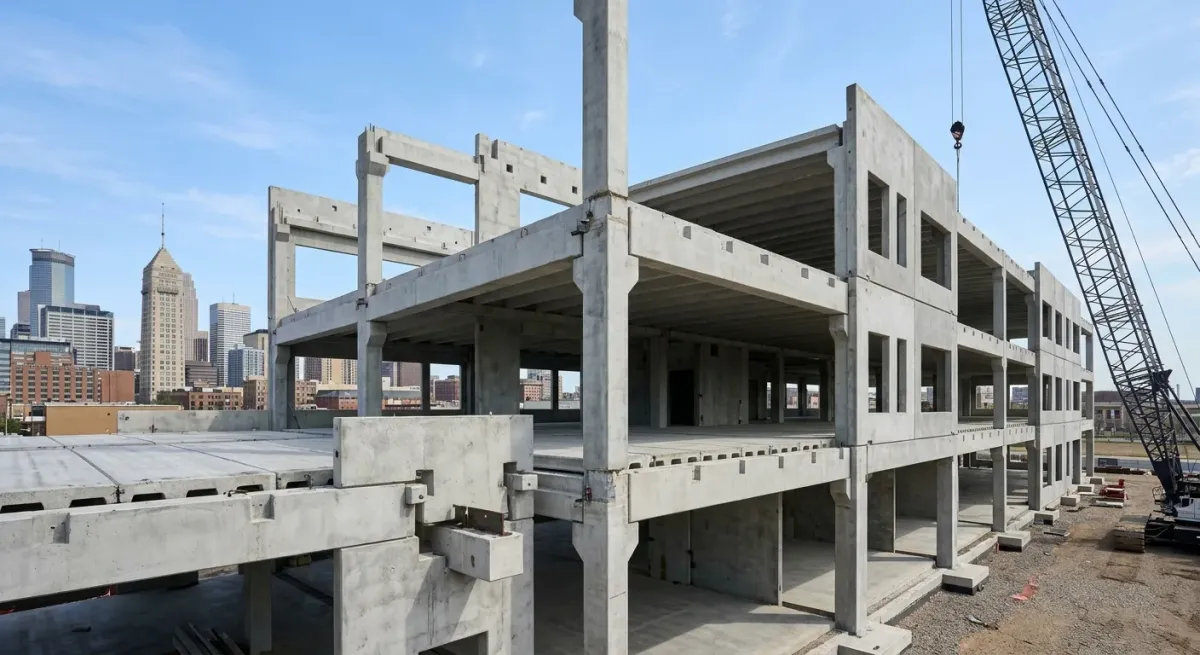
Double tees, hollow-core planks, inverted tee beams, and precast columns form the gravity system in parking structures, office buildings, and warehouse facilities. See our parking consulting services for how precast integrates into structured parking design.
Wall Panels
Precast wall panels serve as both cladding and lateral load-resisting elements. Insulated sandwich panels add thermal performance. Connection design between panels and the primary structure requires careful attention to thermal movement and differential settlement.
Stairs, Steps, and Site Elements
Precast stairs, landings, curbs, and pavers are common on institutional and commercial sites. They're straightforward to engineer but require coordination with the structural frame to handle load paths and tolerances correctly.
Specialty and Custom Members
Unique geometry, exposed architectural finishes, or structural demands that fall outside standard product catalogs require custom engineering. Projects like the City Vue Apartments in Eagan, Minnesota illustrate how precast systems can be tailored to complex building programs.
Our Process
How a Precast Engineering Engagement Works
- 01
Structural System Definition
We review the project program, loading requirements, and site constraints to define the precast system. This includes member selection, span arrangement, and preliminary connection concepts.
- 02
Design and Detailing
Member design, connection details, and fabrication drawings are developed in coordination with the precast producer. Tolerances, handling, and erection sequence are engineered into the drawings, not left to the field.
- 03
Construction Support
We provide responses to RFIs, review erection submittals, and can support construction inspection during the structural phase. Problems caught at the shop drawing stage cost a fraction of what they cost once steel is in the air.
What Shapes the Cost and Scope of Precast Engineering
Precast engineering scope is driven by the project, not by a standard fee schedule.
- Number of unique piece types
- High repetition in a structure means fewer unique member designs; irregular buildings with many custom pieces require proportionally more engineering effort.
- Connection complexity
- Gravity connections in a simple warehouse frame are far less involved than moment-resisting or seismic connections in a mid-rise structure.
- Coordination with other systems
- Projects where precast interfaces with structural steel, post-tensioned slabs, or complex MEP penetrations require additional detailing and coordination.
- Fabricator involvement
- Early engagement with the precast producer reduces design iterations and resolves plant capability questions before they become field problems.
Frequently Asked Questions
What is the difference between precast concrete and cast-in-place concrete?
What are examples of precast concrete products used in structural engineering?
How does precast concrete handle extreme temperature changes?
What are the main advantages of precast concrete for commercial projects?
What is the downside of precast concrete?
How long does precast concrete engineering typically take?
What types of structures are commonly built with precast concrete?
What are examples of precast concrete products?
What types of structures can be built with precast concrete components?
Why might a project choose precast over traditional concrete construction methods?
How long does the precast concrete engineering and fabrication process typically take?
In the field
A look at our work
Related
Next step
Start a Conversation About Your Precast Project
Rather talk now?(651) 292-1123