
Civil Engineering Consulting
Site analysis, drainage design, and permitting coordination handled by engineers who've worked on complex projects nationwide for 47 years.
Request an estimate
Tell us what you need
Civil Engineering Consulting Services Explained
Civil engineering consulting covers the site-side work that makes a building project buildable: grading, drainage, utilities, permitting, and construction documents that satisfy local code. Reigstad has provided civil and structural engineering services to architects, owners, and contractors across the country since 1979, and the firm is licensed in Minnesota and Mississippi. If you're starting a project and need someone who can read a site, work through the permit process, and stay involved through construction, call (651) 292-1123.
What drives the scope and cost of civil engineering work is the site itself: soil conditions, existing grades, impervious surface area, proximity to wetlands or regulated drainages, and what the local authority having jurisdiction requires before they'll issue a permit. Projects in the Twin Cities metro carry Minnesota-specific obligations under MPCA NPDES rules and local watershed district requirements. Cold climate design adds another layer: freeze-thaw cycles affect pavement section design, storm pipe burial depth, and how snow storage gets accounted for in a site plan. Every job is different. Contact Reigstad for an accurate estimate.
What Civil Engineering Consulting Involves
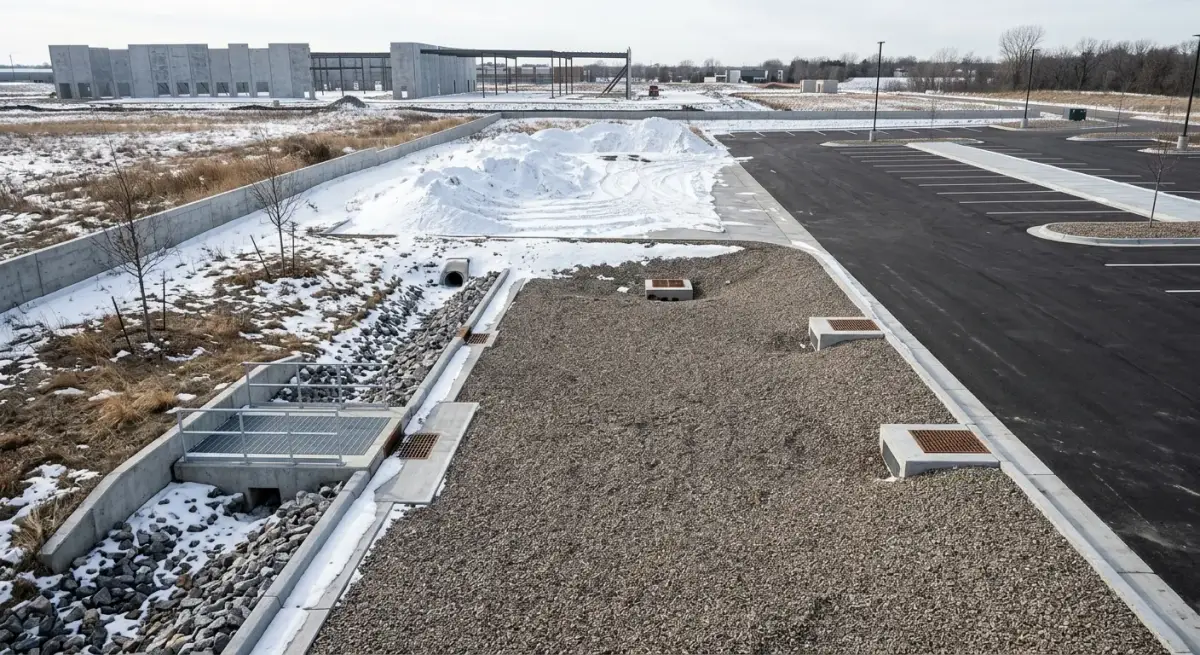
- Site analysis and feasibility review before design begins
- Grading and drainage design that meets watershed district rules
- Storm water management per Minnesota NPDES and MPCA requirements
- Construction documents and permit coordination with local agencies
- Construction administration from groundbreaking through site closeout
Our Process
From Site Assessment to Construction Closeout
Civil engineering on a project moves in phases, and each one builds on the last.
Site Assessment and Feasibility
Before design dollars are committed, we evaluate the site: topography, soils, existing utilities, zoning constraints, and what the jurisdiction requires. A feasibility study at this stage is cheaper than a redesign after preliminary drawings are submitted.
Design Development and Permit Documents
Preliminary design establishes grades, drainage patterns, and utility routing. Final design produces the stamped construction documents that go to the building department and watershed district. These are two distinct submittals with different review timelines.
Construction Administration
Design doesn't end at permit issuance. We stay involved during construction to review contractor submittals, respond to field conditions, and confirm the site is built to what was designed. Skipping this step is how small field deviations become drainage problems after occupancy.
Site Conditions
Minnesota Soil and Climate Realities That Affect Civil Design
Site engineering in this region has constraints that generic civil standards don't fully address.
Clay Soils and Drainage
Much of the Twin Cities metro sits on glacial till with high clay content. Clay's low permeability means storm water doesn't infiltrate the way it would on sandy soils, so engineered drainage systems carry more of the load. Undersized storm infrastructure on a clay site backs up fast.
Freeze-Thaw Cycles
Minnesota's frost depth runs to 42 inches in a cold winter. Storm pipes, foundation drains, and utility crossings all have to be buried deep enough to avoid heave. Pavement sections need adequate subbase to survive repeated freeze-thaw without premature failure.
Watershed District Oversight
Most Twin Cities development sites fall within a watershed district's jurisdiction, which adds a permit layer on top of city review. Each district has its own rate control and water quality standards. Knowing which district applies and what they require is part of the work, not an afterthought.
Snow Storage and Impervious Surface
Site plans that don't account for snow storage end up with plows pushing snow into landscape islands, fire lanes, or accessible routes. Cold-climate civil design reserves space for it up front, before the paving contractor lays out striping.
Civil and Structural Work on the Same Project
How to Work With Reigstad on a Civil Project
47 years of project work has clarified how good civil consulting actually runs.
- Licensed in Minnesota and Mississippi
- Engineering firm license held in both states; not a subcontractor arrangement
- In practice since 1979
- Founded by Gordon Reigstad, PhD, PE, SE; continuous operation for 47 years
- Involved through construction, not just design
- Construction administration is part of the engagement, not an add-on
- Direct communication with the design team
- You talk to the engineers, not a project coordinator relaying messages
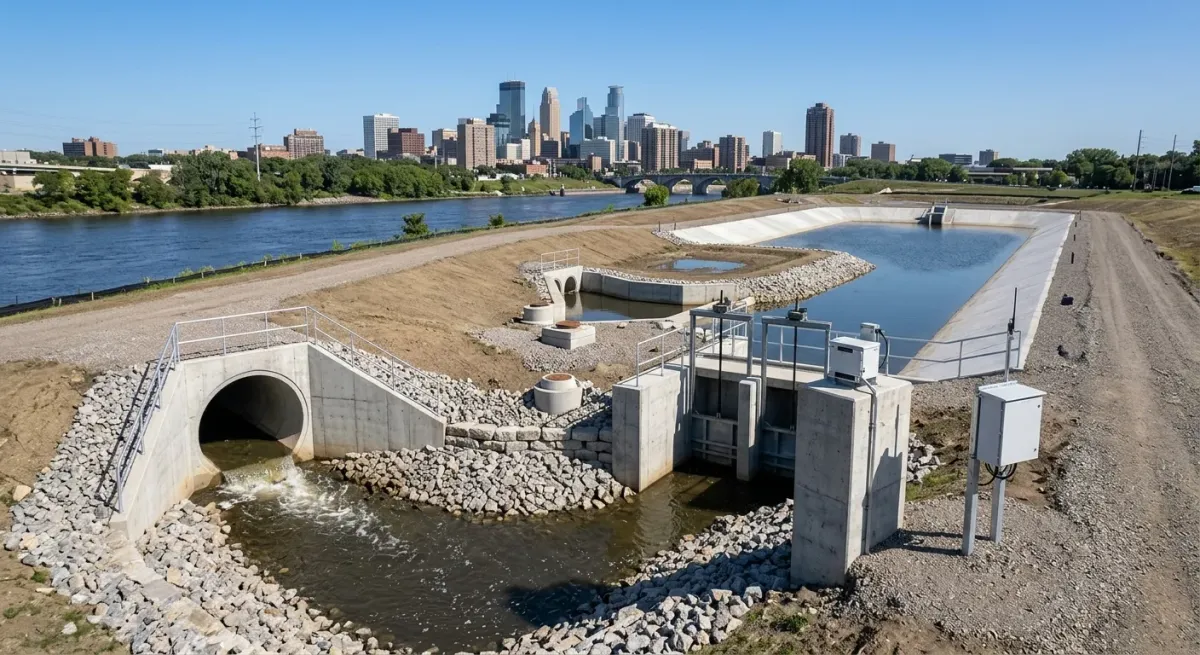
In the field
A look at our work
Frequently asked questions
What does a civil engineering consultant actually do on a project?
How long does the permitting process take for a civil project in this region?
Why do I need both a surveyor and a civil engineer?
What are Minnesota's storm water management requirements for a development site?
What's the difference between preliminary and final civil design?
Does Reigstad handle civil work alongside structural engineering on the same project?
How much does civil engineering consulting cost?
Related
Next step
Start a Conversation About Your Project
Rather talk now?(651) 292-1123